Beyond the Stage: Recognizing Educational Leadership Through the Fine Arts
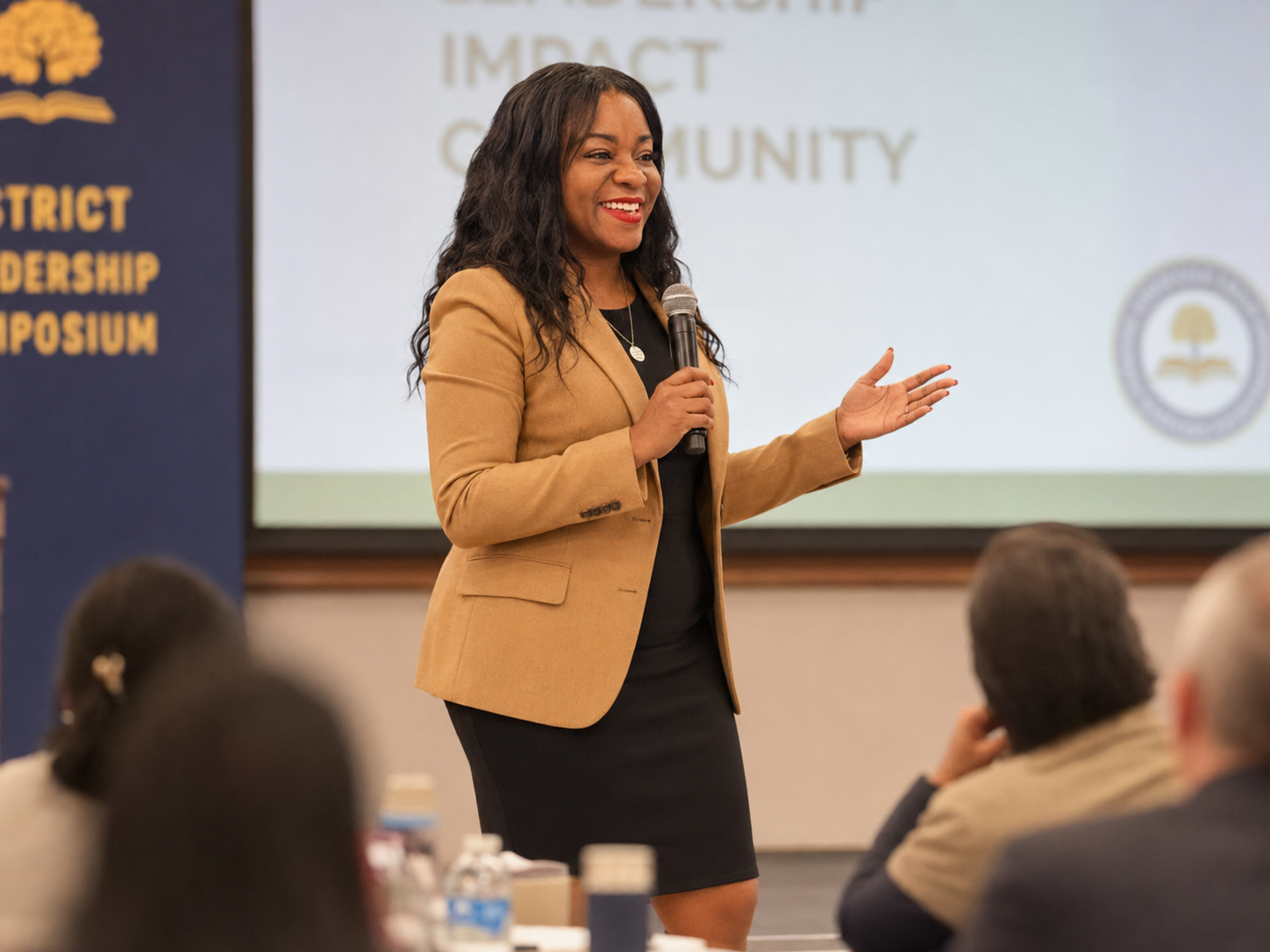
It's time to see the leadership behind the performance.
When we talk about physicians, we rarely define them by the procedures they perform. We understand that their work includes research, analysis, diagnosis, collaboration, leadership, and years of specialized preparation. When we talk about school administrators, we understand that they develop people, shape culture, allocate resources, make strategic decisions, and influence entire communities.
Fine Arts educators deserve the same level of precision.
Dance educators are often described through the performances they produce and the choreography they create. The public sees competitions, concerts, productions, uniforms, formations, and applause. Those moments are meaningful, but they are the most visible expression of a much larger body of work.
Behind every strong performance is a system of planning, instruction, feedback, culture-building, student development, family communication, and sustained preparation.
Several years ago, I received a text message that has remained with me. In the middle of an otherwise ordinary conversation, the sender referred to my role as a dance teacher as someone who teaches “dancing around” and suggested that teaching dance carried less significance than teaching an academic subject.
The message stayed with me because it reflected a perception many Fine Arts educators encounter throughout their careers.
That perception raises an important question:
How did one of education’s most interdisciplinary fields become so narrowly understood?
Public education has shaped every stage of my life. I attended Houston ISD before graduating from Fort Bend ISD. I later returned to serve both districts as an educator and instructional leader. Today, I continue that relationship as the parent of children educated in those same systems. Those experiences have given me a unique perspective on the role Fine Arts educators play in shaping students, schools, and communities.
Across each chapter of my life, I have watched Fine Arts educators cultivate leadership, build community, create belonging, and expand opportunities for students in ways that rarely appear in job descriptions, campus reports, or public conversations about school success. Those outcomes deserve the same recognition as the performances audiences celebrate.
My undergraduate education at Howard University gave me the vocabulary to explain what I had experienced for years. Pursuing a Bachelor of Fine Arts in Dance meant becoming both an artist and a scholar. We were expected to research, analyze, defend ideas, engage with history and culture, develop technical skill, and understand the body as a site of knowledge.
That philosophy has shaped every leadership role I have held since.
Those ideas were reinforced through my years as a professional performer, where excellence depended on preparation, collaboration, accountability, and continuous refinement. When I entered public education full-time, I recognized those same principles in the strongest schools and the most effective educational leaders.
Vision, discipline, collaboration, reflection, accountability, and continuous improvement are characteristics of high-performing organizations. They are also embedded in strong Fine Arts programs.
Fine Arts educators build programs that strengthen school communities. They create cultures where students develop confidence, responsibility, resilience, and leadership alongside artistic skill. They design learning experiences, mentor young people, cultivate partnerships with families, advocate for equitable opportunities, and contribute to the broader mission of student success.
That conviction became the catalyst for writing Beyond the Stage and later developing the CREATE Framework™. Both emerged from the same belief: exceptional Fine Arts programs are sustained through intentional leadership, strategic systems, meaningful relationships, and cultures where excellence becomes the standard.
As my career progressed, I found myself returning to the same question: Why is it so difficult to describe the work of Fine Arts educators in language that reflects its full complexity?
The more I studied leadership, developed programs, and worked alongside exceptional educators, the more convinced I became that our profession deserves a vocabulary equal to the complexity of its work. I was searching for language that accurately reflected the work of Fine Arts educators and the leadership they demonstrate every day.
I wrote Beyond the Stage to broaden the conversation surrounding Fine Arts education by examining the leadership, systems, and educational impact that often remain hidden behind the final performance.
My hope is that it encourages educators, school leaders, and policymakers to reconsider how we define educational leadership and, in doing so, expand what schools believe is possible through the arts.
If these ideas resonate with you, I invite you to read my featured executive brief, Beyond the Stage: Reimagining the Role of the Dance Educator as an Educational Leader.
I would welcome the opportunity to continue the conversation.