
Big Ideas, Real Impact.
Publications and leadership resources designed to help schools, districts, and arts organizations think deeply, lead strategically, and build programs that last.

Beyond the Stage: Reimagining the Role of the Dance Educator as an Educational Leader
Beyond the Stage examines the role of the dance educator beyond performance and production. This executive brief reframes dance educators as instructional leaders, culture builders, program designers, and contributors to school excellence. It invites educators, campus leaders, and district teams to think more deeply about Fine Arts access, creative learning, student development, and sustainable program growth.

Beyond the Stage: When Zip Code Determines Student Access
A student’s zip code should never determine access to a high-quality Fine Arts education.
In Texas, Fine Arts has a clear place in the required curriculum. The Texas Education Agency identifies art, dance, music, and theatre as Fine Arts disciplines. Districts and open-enrollment charter schools must offer an enrichment curriculum that includes Fine Arts, provide sufficient instructional time for students to learn the required standards, and ensure students complete required Fine Arts coursework before graduation. (Texas Education Agency) The state requirement establishes a floor. Equity requires a deeper examination of what students actually receive.

Beyond the Stage: Student Development Is the Real Performance
Student development is the strongest evidence of a Fine Arts program’s impact. A performance can show preparation, skill, confidence, collaboration, discipline, and artistic growth. The deeper leadership question is whether a program can document how students are developing through the artistic process over time. Fine Arts education gives students repeated opportunities to create, revise, present, analyze, collaborate, receive feedback, lead, reflect, and connect their work to culture, identity, and meaning. In Texas, those outcomes already align with the Fine Arts TEKS. The next step is building stronger systems to measure them.
Beyond the Stage: Recognizing Educational Leadership Through the Fine Arts
Every profession is shaped by the language used to describe it. Too often, dance educators are described by the performances they produce rather than the educational leadership they provide. The public sees choreography, competitions, concerts, and productions. What often goes unseen are the systems, relationships, instructional decisions, and developmental work taking place long before an audience ever applauds.

Beyond the Stage: Allow Me to Reintroduce Myself
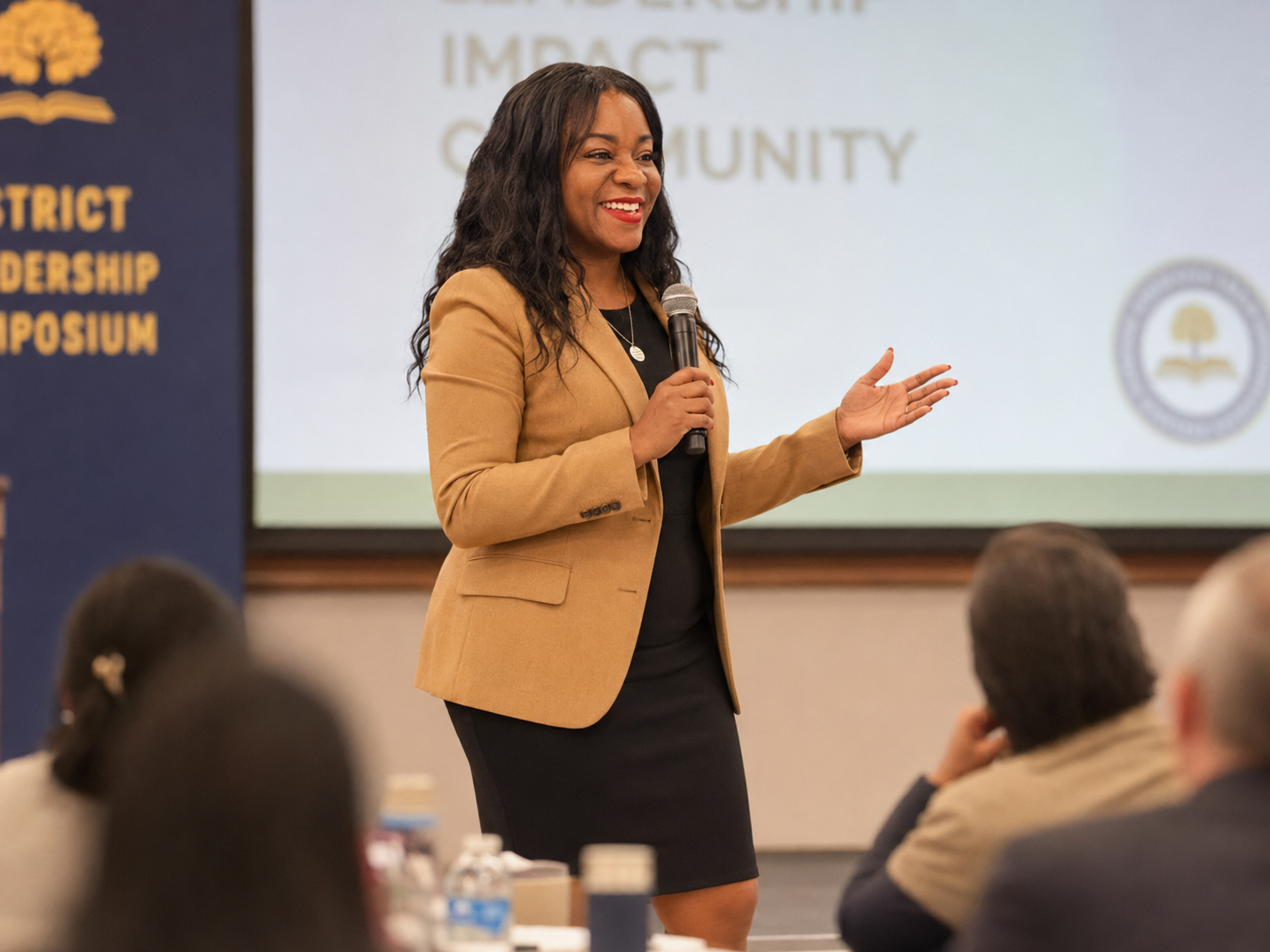
At TDEA, I stood before a room of dance educators and asked a question that was simple on the surface, but deeply personal for many of us:, “How are you introduced on your campus?”
That question became the foundation of my presentation, Allow Me to Reintroduce Myself. The session invited educators to examine the gap between how their work is described by others and how their work functions in practice. We considered campus introductions, student perspectives, leadership language, and the evidence Fine Arts educators already have but do not always name with precision.

Beyond the Stage: What Makes a Fine Arts Program Excellent?
An excellent Fine Arts program can be measured. The strongest programs provide standards-aligned instruction, certified educators, protected instructional time, appropriate resources, safe facilities, student participation data, and leadership structures that can survive changes in staffing, funding, and administration.

Beyond the Stage: Building Programs That Last
A lasting Fine Arts program is intentionally designed, properly funded, appropriately staffed, regularly monitored, and strategically protected. Strong programs are built through systems that can withstand leadership transitions, budget pressure, staffing changes, enrollment shifts, facility challenges, and competing district priorities. Talent matters. Passion matters. Tradition matters. Program survival, however, depends on structure. Begins Here